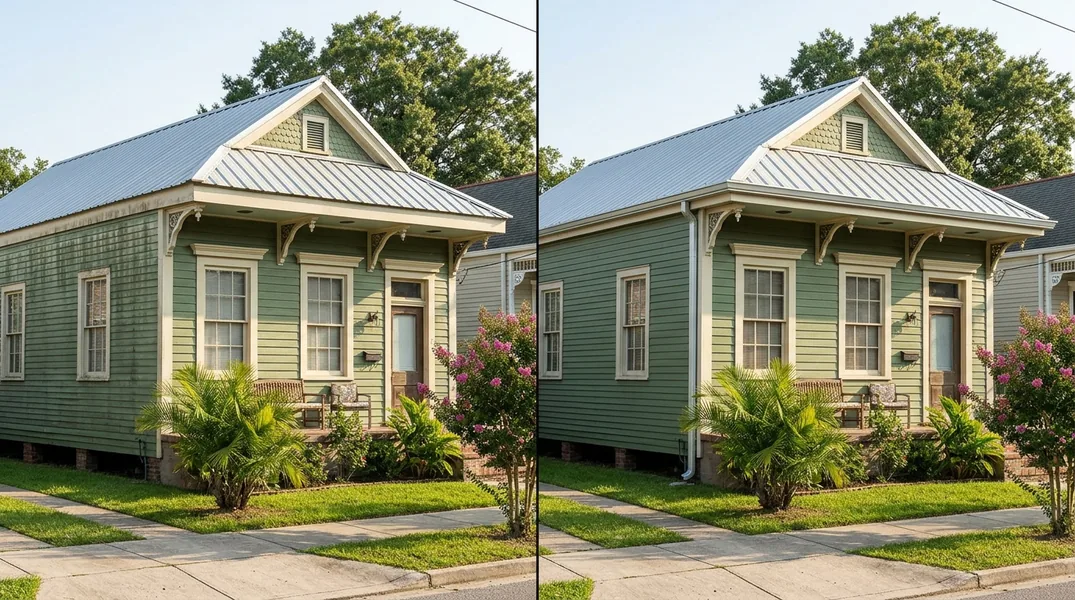
Two Metal Roofing Styles, One Big Decision
If you are researching metal roof types in New Orleans, you have probably noticed that two names come up again and again: 5V crimp and standing seam. Both are durable, both are made from painted steel or aluminum, and both can last decades in our hot, humid, hurricane-prone climate. The difference lies in how the panels are formed, how they are fastened, and how they look once the job is done.
Understanding those differences before you request a free estimate will help you ask better questions and avoid paying for features you do not need. At New Orleans Metal Roofing, we install both styles, and we have seen firsthand how the right choice depends on the home, the budget, and the look the owner wants. This guide breaks down the tradeoffs so you can decide with confidence.
What Is 5V Crimp Metal Roofing?
5V crimp metal roofing is the classic corrugated-style panel you have likely seen on porches, sheds, and older homes across Louisiana. The name comes from the profile: five raised V-shaped ridges running down each panel, which add stiffness and help channel water toward the eaves. Panels are typically fastened through the metal with exposed screws fitted with neoprene washers, a method that is straightforward, fast, and affordable.
Because the panels are installed with exposed fasteners, 5V crimp is generally the more budget-friendly of the two options. It performs well on roofs with a reasonable pitch and is a popular choice for homeowners in New Orleans who want metal's longevity without the premium price of a concealed-fastener system. The tradeoff is a more utilitarian appearance and the need to check fastener washers over time, since they are the first line of defense against leaks.
What Is Standing Seam Metal Roofing?
Standing Seam Metal Roofing uses panels with raised vertical legs that are mechanically seamed together, hiding the fasteners completely beneath the seam. That concealed attachment is the key advantage: there are no exposed screws to back out or washers to degrade, which makes standing seam one of the most weather-tight residential metal roofing systems available. The seams also give the roof a clean, continuous look that many homeowners prefer on modern and historic homes alike.
Standing seam panels are typically formed from heavier-gauge steel or aluminum and can be installed with a range of seam heights and profiles. The system costs more than 5V crimp, both in materials and labor, but it often pays that back through lower maintenance and a longer service life. For homeowners in Metairie and across the region who plan to stay in their homes long term, the concealed-fastener design is a compelling reason to stretch the budget.
5V Crimp vs. Standing Seam: How They Compare in New Orleans
The most obvious difference is appearance. 5V crimp has a traditional, slightly ridged look that suits cottages, camps, and older neighborhoods, while standing seam offers a sleek, flat-panel aesthetic with strong vertical lines. Neither is inherently better; it comes down to the style of your house and the curb appeal you want. If you are matching an existing roof or preserving a historic look, 5V crimp may be the more faithful choice.
Performance is the second big factor. New Orleans gets intense sun, heavy summer thunderstorms, and the occasional tropical system, so wind uplift and water management matter. Standing seam's concealed fasteners and mechanically seamed joints give it an edge in high-wind and leak-resistance tests, which is why it is often specified for coastal construction. 5V crimp can perform well too, but it depends more heavily on correct installation and on maintaining the exposed screws over the years. On cost, 5V crimp is the clear winner upfront, while standing seam commands a premium for its concealed system and cleaner finish.
Metal Roof Installation Near Me: Choosing the Right System for Your Home
Choosing between these two systems is really a conversation about your priorities. If your budget is tight, your roof pitch is adequate, and you like the traditional look, 5V crimp is a sensible, durable option. If you want the cleanest appearance, the fewest penetrations, and the lowest long-term maintenance, standing seam is worth the investment. Many homeowners also ask about a Metal Roof Over Shingles (Retrofit), which can sometimes be done with either panel type and may reduce tear-off costs.
Either way, the installer matters as much as the panel. Proper flashing, underlayment, and fastening details are what keep a metal roof watertight through decades of Gulf Coast weather. If you are searching for metal roof installation near me in the New Orleans area, look for a contractor who will walk your roof, explain the tradeoffs honestly, and stand behind the work. Our team serves homeowners throughout the region, including Kenner and Gretna, and we are happy to help you compare options in person.
Metal Roof Installation Cost in New Orleans: What to Budget
Pricing for a metal roof depends on the panel type, the square footage, the roof's complexity, and whether any decking repairs are needed. As a general rule, 5V crimp sits at the lower end of the metal roofing range because the panels and fastening method are simpler, while standing seam sits at the higher end due to heavier materials and more specialized labor. A straightforward gable roof will always cost less per square than a cut-up roof with valleys, dormers, and multiple penetrations.
Rather than guess, the best step is to get a written pricing breakdown for your specific home. We provide itemized estimates so you can see exactly what you are paying for and compare 5V crimp against standing seam side by side. Call New Orleans Metal Roofing at (504) 636-6074 to schedule a free estimate, and we will help you weigh the upfront cost against the long-term value of each system.
Looking for a professional metal roofing contractor in New Orleans? New Orleans Metal Roofing responds fast for all your metal roofing needs.
Get a Free QuoteOur services: Metal Roof Installation · Standing Seam Metal Roofing · Metal Roof Replacement